
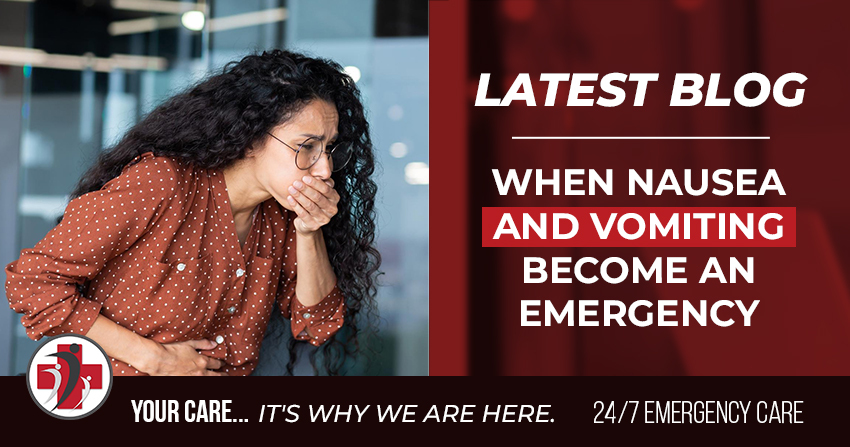
Nausea and vomiting are very common. Most people experience them at some point, whether from a stomach bug, food poisoning, stress, or even motion sickness. In many cases, symptoms improve with rest, fluids, and time.
But there are situations when nausea and vomiting are signs of something more serious. Knowing when to seek emergency care can protect your health and, in some cases, save your life.
This guide explains when nausea and vomiting are normal and when they should not be ignored.
Common Reasons People Feel Nauseous or Vomit
Not all nausea is dangerous. Some of the most common and less serious causes include:
- Stomach viruses or food poisoning
- Eating spoiled or greasy foods
- Dehydration
- Anxiety or panic
- Migraines
- Side effects from medications
- Motion sickness
In these cases, symptoms often improve within a day or two. Sipping fluids and resting usually helps.
The concern arises when symptoms are severe, long-lasting, or accompanied by other warning signs.
Warning Signs That Mean You Should Go to the Emergency Room
You should seek emergency medical care right away if nausea or vomiting is accompanied by any of the following symptoms:
- Vomiting that lasts more than several hours
- Inability to keep fluids down
- Severe or worsening abdominal pain
- Chest pain or pressure
- Shortness of breath
- High fever that does not improve
- Vomiting blood or dark material that looks like coffee grounds
- Severe dizziness, confusion, or fainting
- Signs of dehydration such as very dark urine, dry mouth, or extreme weakness
These symptoms may point to serious conditions such as infections, intestinal blockage, internal bleeding, heart issues, or severe dehydration.
When symptoms feel intense or unusual, it is safer to be evaluated by emergency medical professionals.
Nausea and Vomiting Can Be Signs of Heart Problems
Many people are surprised to learn that nausea and vomiting can sometimes be linked to heart-related emergencies, especially in adults over 40.
Heart-related nausea may come with:
- Sweating
- Chest discomfort
- Fatigue
- Pain in the arm, jaw, back, or neck
- Shortness of breath
Women and older adults are more likely to experience nausea instead of classic chest pain during heart events. If nausea feels sudden, severe, or different from anything you have felt before, emergency care is important.
When Vomiting Leads to Dangerous Dehydration
Repeated vomiting can quickly lead to dehydration, which can be dangerous if not treated. Dehydration affects blood pressure, heart function, and kidney health.
Signs that dehydration may be becoming serious include:
- Little or no urination
- Dry lips and mouth
- Rapid heartbeat
- Feeling faint when standing
- Extreme fatigue
Older adults, children, and people with chronic medical conditions are especially at risk. If fluids cannot be kept down, emergency care is needed.
Why Waiting Can Make Things Worse
Many people hesitate to go to the emergency room because they hope their symptoms will pass. While this is understandable, delaying care can sometimes allow serious conditions to worsen.
Emergency medical teams are trained to quickly evaluate nausea and vomiting, identify the cause, provide relief, and rule out life-threatening issues. Early care often leads to faster recovery and peace of mind.
When to Visit the Emergency Room
If nausea and vomiting start suddenly, become severe, or are paired with concerning symptoms, it is best to seek emergency care immediately.
At Fountain Hills Emergency Room and Medical Center, our experienced medical team provides prompt evaluation and treatment for nausea, vomiting, dehydration, abdominal pain, chest discomfort, and other urgent symptoms.
Contact Information
- Medical Clinic: (602) 671-7981
- 24/7 Emergency: (602) 671-7990
Location
Visit our modern facility in Fountain Hills, AZ — open 24/7 for emergency and family medical services.
A Final Word for Patients and Families
Not every episode of nausea or vomiting is an emergency, but some situations should never be ignored. Trust your instincts. If something feels wrong, getting checked is always the right choice.
Emergency care is there to help you feel better, get answers, and stay safe.