
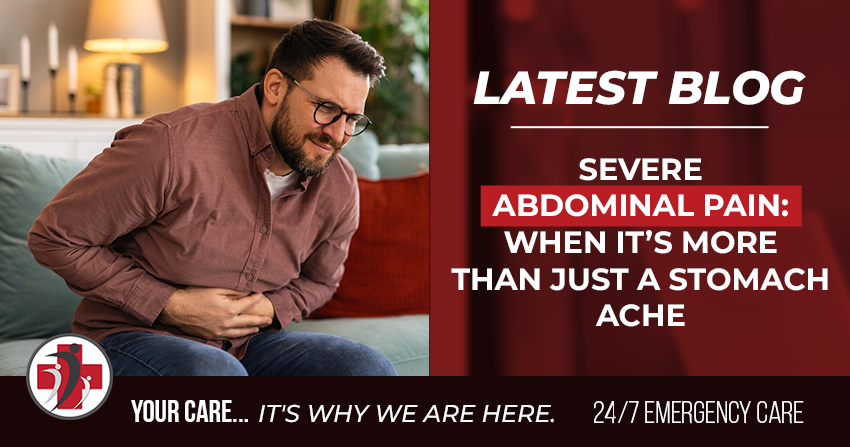
Stomach pain happens to everyone at some point. Most of the time, it’s caused by something minor like gas, indigestion, or something you ate. But severe abdominal pain can be a warning sign of a serious medical condition that needs immediate attention.
At Fountain Hills Emergency Room and Medical Center, we want you to know how to recognize when abdominal pain is more than “just a stomach ache” — and when it’s time to seek emergency care.
What Does “Severe” Abdominal Pain Mean?
Severe abdominal pain is pain that:
- Comes on suddenly
- Is intense or worsening
- Doesn’t improve with rest or home remedies
- Interferes with daily activities
- Feels sharp, stabbing, or unbearable
Trust your instincts — if the pain feels unusual or alarming, it shouldn’t be ignored.
Warning Signs That Abdominal Pain May Be Serious
Seek emergency medical care right away if abdominal pain is accompanied by:
- Severe or persistent pain lasting more than a few hours
- Pain that comes on suddenly and feels intense
- Fever or chills
- Nausea or repeated vomiting
- Vomiting blood or material that looks like coffee grounds
- Blood in the stool or black, tarry stools
- Chest pain or shortness of breath
- Dizziness, fainting, or weakness
- A rigid, swollen, or tender abdomen
These symptoms may signal a medical emergency.
Possible Causes of Severe Abdominal Pain
Abdominal pain can come from many organs, not just the stomach. Some serious causes include:
Appendicitis
- Pain often starts near the belly button and moves to the lower right side
- Pain worsens with movement
- Often accompanied by fever or nausea
Gallbladder Issues
- Sharp pain in the upper right abdomen
- Pain may radiate to the back or shoulder
- Often triggered after eating fatty foods
Pancreatitis
- Severe upper abdominal pain that spreads to the back
- Nausea, vomiting, fever
- Pain may worsen after eating
Bowel Obstruction
- Severe cramping
- Abdominal bloating
- Inability to pass gas or stool
- Vomiting
Internal Bleeding
- Sudden, intense pain
- Weakness or dizziness
- Pale or clammy skin
Gynecological Emergencies (Women)
- Ectopic pregnancy
- Ovarian cyst rupture or torsion
- Severe pelvic or lower abdominal pain
When to Go to the Emergency Room
Go to the ER immediately if abdominal pain:
✔ Is severe or rapidly worsening
✔ Lasts longer than expected
✔ Occurs with vomiting, fever, or bleeding
✔ Happens during pregnancy
✔ Occurs after an injury or accident
✔ Makes it hard to stand, walk, or breathe
Delaying care can lead to serious complications.
What NOT to Do at Home
If severe abdominal pain is present:
- ❌ Don’t ignore it
- ❌ Don’t take strong painkillers to “push through”
- ❌ Don’t apply heat without medical advice
- ❌ Don’t eat or drink large amounts
These actions can sometimes worsen the condition or mask important symptoms.
How Fountain Hills Emergency Room and Medical Center Can Help
Our emergency team is equipped to:
- Perform rapid diagnostic testing
- Identify the cause of abdominal pain
- Provide immediate pain relief
- Deliver fast, compassionate treatment
- Refer for surgery or specialty care if needed
We’re open 24/7, so you never have to wait when every minute matters.
Final Thoughts
Not all stomach pain is dangerous — but severe abdominal pain should never be ignored. Knowing the warning signs can help you act quickly and protect your health.
If something feels wrong, trust your body and seek emergency care.
📍 Need Emergency Care Now?
Visit Fountain Hills Emergency Room and Medical Center for immediate, expert evaluation and treatment — anytime, day or night.