
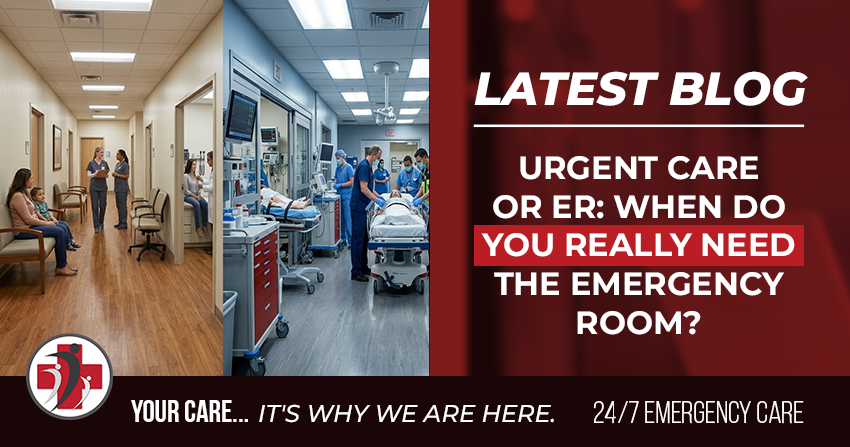
When a sudden health issue arises, one of the most common questions people ask is: Should I go to urgent care, or do I need an emergency room? It’s a decision that often has to be made quickly, sometimes under stress, and without medical expertise.
Across the United States, patients frequently search for terms like “urgent care vs emergency room,” “ER near me,” or “when to go to the emergency room.” These searches reflect a real concern; choosing the right level of care can impact not only your health outcomes but also how quickly you receive treatment.
While urgent care centers are convenient and helpful for many situations, they are not designed to handle every condition. Understanding the difference between urgent care and an emergency room is essential, especially when dealing with symptoms that may be serious or life-threatening.
Understanding the Role of Urgent Care
Urgent care centers play an important role in the healthcare system. They are designed for non-life-threatening conditions that still require prompt attention but do not necessarily need the advanced capabilities of an emergency room.
Typically, urgent care facilities treat issues like minor infections, mild fevers, small cuts, sprains, or cold and flu symptoms. They are often a good option when your primary care physician is unavailable, especially during evenings or weekends.
One of the main advantages of urgent care is convenience. Patients can usually walk in without an appointment and receive treatment relatively quickly. However, while urgent care centers are efficient for minor concerns, they have limitations when it comes to diagnosing and treating more serious conditions.
What Makes an Emergency Room Different?
An emergency room is equipped to handle critical and complex medical situations. Unlike urgent care centers, ERs operate 24/7 and are staffed with highly trained emergency physicians who specialize in managing life-threatening conditions.
Emergency rooms also have access to advanced diagnostic tools such as CT scans, comprehensive lab testing, and cardiac monitoring. This allows for rapid evaluation and immediate intervention when time is critical.
For patients searching for an “emergency room near me,” the expectation is clear: fast, comprehensive care for serious symptoms that cannot wait.
Why the Decision Matters More Than You Think
Choosing between urgent care and an emergency room is not just about convenience—it can directly affect your health.
Many serious conditions begin with symptoms that may seem mild at first. Chest discomfort, for example, might feel like indigestion, while dizziness could be mistaken for fatigue. In these cases, going to urgent care instead of an emergency room could delay diagnosis and treatment.
Emergency rooms are specifically designed to handle uncertainty. When symptoms are unclear but potentially dangerous, it is safer to choose a setting that can quickly rule out serious conditions.
When Urgent Care Is Enough
There are many situations where urgent care is the right choice. For example, if you have a minor illness or injury that needs attention but is not worsening rapidly, urgent care can provide effective treatment.
Conditions such as mild respiratory infections, small cuts that may need stitches, or minor sprains can typically be handled without the need for emergency-level care. In these cases, urgent care offers a practical and efficient solution.
However, the key distinction lies in stability. If your symptoms are manageable, not severe, and not escalating, urgent care is often sufficient. The moment symptoms become intense, unpredictable, or alarming, the situation changes.
When You Should Go to the Emergency Room
Serious conditions require a different level of care—one that urgent care centers are not equipped to provide. If there is any possibility that your condition could be life-threatening, an emergency room is the appropriate choice.
Symptoms such as severe chest pain, difficulty breathing, sudden weakness, confusion, or intense abdominal pain should never be ignored. These could indicate conditions like heart attacks, strokes, or internal injuries that require immediate intervention.
Emergency rooms are built for speed and precision. They are designed to diagnose and treat critical conditions without delay, which can be life-saving in many situations.
The Risk of Choosing the Wrong Option
One of the biggest risks patients face is underestimating their symptoms. It’s common for people to hope that a condition is minor, choosing urgent care for convenience or cost reasons. However, this decision can sometimes lead to delays in receiving the care they truly need.
For example, a patient experiencing early signs of a heart attack may go to urgent care, only to be referred to an emergency room later. This extra step can cost valuable time during a critical window for treatment.
Emergency rooms eliminate this uncertainty by providing immediate access to advanced care. When symptoms are unclear or severe, it is always safer to start at the highest level of care available.
Speed and Access to Advanced Care
One of the defining advantages of an emergency room is its ability to act quickly. From the moment a patient arrives, the focus is on rapid evaluation and immediate treatment.
Unlike urgent care centers, which may have limited diagnostic capabilities, emergency rooms can perform a wide range of tests on-site. This includes imaging, lab work, and cardiac monitoring, all of which contribute to faster diagnosis.
For patients dealing with serious symptoms, this speed can make a significant difference. Early detection and treatment often lead to better outcomes and reduced complications.
A Real-World Perspective
Consider a situation where someone experiences sudden shortness of breath. It could be something relatively minor, like anxiety or a mild infection. However, it could also be a sign of a more serious condition, such as a pulmonary embolism or heart problem.
In a case like this, urgent care may not have the tools to fully evaluate the situation. An emergency room, on the other hand, can quickly run the necessary tests to determine the cause and begin treatment immediately.
This ability to handle both minor and major possibilities is what makes emergency rooms essential for serious conditions.
Cost vs. Care: What Should You Prioritize?
One reason many patients hesitate to visit the emergency room is cost. Urgent care is generally more affordable, which makes it an appealing option for non-emergencies.
However, when it comes to serious conditions, the priority should always be receiving the right level of care at the right time. Delaying treatment or choosing the wrong facility can lead to complications that may ultimately result in higher medical costs and longer recovery times.
Healthcare decisions should not be based on cost alone, especially when symptoms could indicate a serious issue.
How to Make the Right Decision Quickly
In an ideal situation, you would have time to carefully evaluate your symptoms and consult a medical professional. In reality, emergencies often require quick decisions.
A helpful way to think about it is this: if your symptoms feel severe, sudden, or unusual, or if they are interfering with your ability to function normally, it is safer to go to an emergency room.
Urgent care is best reserved for conditions that are clearly minor and stable. When there is doubt, choosing emergency care provides peace of mind and access to a comprehensive evaluation.
The Importance of Acting Without Delay
Timing is critical in many medical conditions. Heart attacks, strokes, and severe infections all require rapid treatment to prevent long-term damage or complications.
Emergency rooms are designed to respond immediately, offering interventions that can stabilize patients and improve outcomes. Waiting too long or choosing a facility that cannot provide the necessary care can reduce the effectiveness of treatment.
Acting quickly is often the difference between a manageable condition and a serious health crisis.
Final Words
The decision between urgent care and an emergency room is one that many people face, often when they least expect it. While urgent care is a valuable resource for minor illnesses and injuries, it is not a substitute for emergency care when dealing with serious conditions.
Emergency rooms provide a higher level of care, including advanced diagnostics, specialized physicians, and immediate treatment capabilities. For symptoms that are severe, sudden, or potentially life-threatening, the emergency room is the safest and most appropriate choice.
If you ever find yourself unsure, it is always better to err on the side of caution. Seeking emergency care ensures that you receive the attention and treatment you need without delay.
In moments where every second counts, making the right decision can protect your health, prevent complications, and ultimately save lives.