
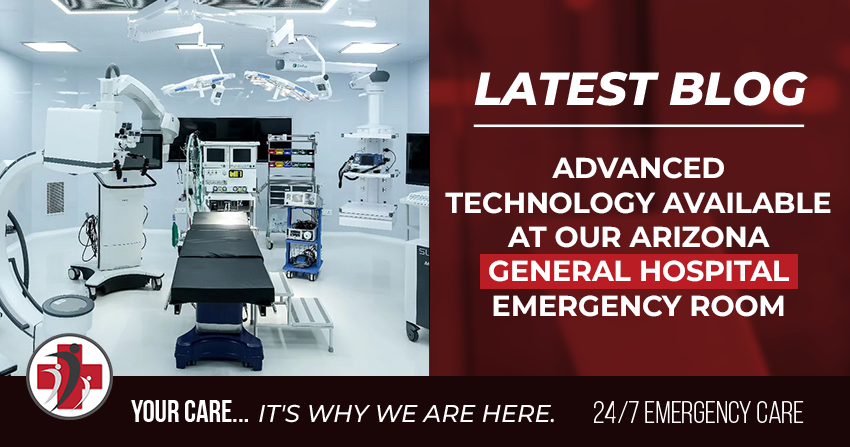
There’s a moment during every emergency room visit when a patient asks, either out loud or silently, “Do they have what they need to figure out what’s wrong with me?” It’s a fair question. All the bedside manner in the world doesn’t matter if the facility lacks the technology to diagnose and treat your condition accurately.
The emergency room at an Arizona general hospital emergency room like Fountain Hills Medical Center is designed around a straightforward idea: give clinicians the tools they need so patients get answers fast. Not tomorrow. Not after a transfer to another facility. Now. Let’s look at the technology that makes that possible.
Why Technology in Emergency Medicine Isn’t Optional
Emergency medicine operates on compressed timelines. A patient presenting with stroke symptoms has a narrow window, sometimes as little as three to four hours, for clot-dissolving medication to be effective. A cardiac event demands immediate EKG interpretation and lab results. A trauma case requires imaging that reveals internal bleeding before it becomes catastrophic.
In each of these scenarios, the available technology directly influences the outcome. An Arizona general hospital emergency room that’s invested in advanced diagnostic and treatment equipment isn’t just offering a better experience; it’s offering better survival odds and fewer complications.
This isn’t about having flashy gadgets for marketing purposes. It’s about clinical necessity.
Advanced Imaging: Seeing Inside When It Counts
Imaging technology has transformed emergency medicine over the past two decades, and the equipment available today can produce remarkably detailed pictures of what’s happening inside your body.
Multi-slice CT scanning is one of the most critical tools in the emergency department. Modern CT scanners capture hundreds of images in seconds, creating detailed cross-sections that physicians use to identify brain bleeds, pulmonary embolisms, aortic dissections, appendicitis, kidney stones, and internal injuries from trauma. The speed of these scans matters enormously; a CT of the head can be completed in under a minute, with results available to the physician shortly after.
Digital X-ray systems have replaced older film-based technology. Digital images are sharper, require less radiation exposure, and are available almost instantly on the physician’s screen. Whether it’s a chest X-ray to rule out pneumonia or a limb X-ray to assess a fracture, digital systems accelerate the diagnostic process significantly.
Bedside ultrasound has become a standard part of emergency care. Emergency physicians use it to evaluate heart function, check for abdominal free fluid (indicating internal bleeding), assess blood vessel integrity, guide IV and central line placement, and even identify gallstones or ectopic pregnancies. The beauty of ultrasound is its immediacy: no radiation, no waiting for a radiology department to become available.
At Fountain Hills Medical Center’s emergency room, these imaging capabilities are available on-site, which eliminates the delays that come with transferring patients to outside imaging centers.
Laboratory Technology: From Sample to Result in Minutes
Behind the scenes of every emergency visit, laboratory technology is working at remarkable speed. Modern Arizona general hospital emergency room facilities operate with in-house labs that can process blood samples, urine samples, and other specimens rapidly.
Automated analyzers run complete blood counts, metabolic panels, liver and kidney function tests, and cardiac biomarkers with precision. These machines can process multiple samples simultaneously, delivering results within 15 to 30 minutes in many cases.
Point-of-care testing takes things even faster. Small, portable devices at the bedside can measure blood glucose, run basic metabolic panels, check blood gases, and perform rapid strep, flu, and COVID tests within minutes. These results help physicians make treatment decisions before the patient has even been fully settled into a room.
Troponin assays, the blood tests that detect heart muscle damage, have become increasingly sensitive. High-sensitivity troponin testing can identify cardiac injury at levels previously undetectable, allowing for earlier intervention in heart attack cases.
Cardiac Monitoring and Life Support Equipment
Heart-related emergencies account for a significant portion of ER visits, and the technology dedicated to cardiac care reflects that reality.
Continuous cardiac monitoring tracks heart rhythm in real time. When a patient is connected to a cardiac monitor, every heartbeat is displayed and recorded. Arrhythmias, abnormal heart rhythms, are detected immediately, allowing the medical team to intervene before the situation deteriorates.
12-lead EKG machines provide detailed snapshots of the heart’s electrical activity from multiple angles. A 12-lead EKG can reveal ST-elevation myocardial infarction (STEMI), the most dangerous type of heart attack, within minutes of application. Identifying a STEMI quickly triggers a specific treatment pathway that can save heart muscle and save lives.
Defibrillators, both manual and automated, are essential for treating cardiac arrest and certain dangerous arrhythmias. Modern defibrillators also include pacing capabilities for patients whose hearts are beating too slowly.
Mechanical ventilators support patients who cannot breathe adequately on their own. These machines deliver precisely calibrated breaths, adjusting to the patient’s needs in real time. They’re used for severe respiratory failure, overdoses affecting breathing, and patients requiring sedation for procedures.
Infusion and Medication Delivery Systems
Getting the right medication into a patient at the right dose and the right speed is a core function of emergency care. Modern infusion pumps are programmable, precise, and equipped with safety features that prevent dosing errors.
IV fluid warmers are used for trauma patients and those with hypothermia, delivering warmed fluids to help maintain body temperature. Rapid infusion systems can deliver large volumes of blood or fluid quickly in cases of severe hemorrhage — a capability that can be life-saving during trauma resuscitation.
An Arizona general hospital emergency room equipped with these systems ensures that medication delivery is as safe and effective as the diagnostic process.
Electronic Health Records and Clinical Decision Support
Technology in the ER isn’t limited to machines and devices. Electronic health record (EHR) systems play a crucial role in patient safety and care coordination.
Modern EHRs give emergency physicians instant access to a patient’s medical history, medication lists, allergies, and previous test results, assuming the patient has been seen within the system before. This information prevents dangerous drug interactions, avoids duplicate testing, and provides clinical context that improves decision-making.
Clinical decision support tools integrated into EHR systems can flag potential diagnoses based on symptoms and lab results, alert providers to critical values, and recommend evidence-based treatment protocols. These tools don’t replace physician judgment; they enhance it.
Trauma-Ready Equipment and Capabilities
Trauma cases, car accidents, falls, and penetrating injuries require a specific set of tools and protocols. A well-equipped ER has trauma bays designed for rapid assessment and intervention.
These bays include overhead surgical lighting, immediate access to imaging, airway management equipment (intubation supplies, surgical airway kits), chest tube insertion tools, and massive transfusion protocols for severe blood loss.
FHMC’s emergency department maintains trauma-ready capabilities so that patients don’t lose critical time waiting for equipment or supplies during the most urgent situations.
Pediatric-Specific Equipment Matters Too
Treating children in an emergency requires more than smaller doses of adult medications. Pediatric patients have unique physiological responses, and the equipment used must be appropriately sized and calibrated.
This includes pediatric-specific IV supplies, smaller airway management tools, weight-based dosing calculators, and monitoring equipment designed for the heart rates and blood pressure ranges typical of children. An Arizona general hospital emergency room that serves families should be prepared for patients of all ages, and the right equipment makes that possible.
How Technology and Human Expertise Work Together
It’s worth emphasizing that no machine, no matter how advanced, replaces the trained physician interpreting the results. Technology provides the data. Human expertise provides the judgment. The best emergency care happens when both are present and working in concert.
A CT scan identifies the bleed. The physician decides how to manage it. The lab confirms troponin elevation. The physician determines whether catheterization is needed. The ultrasound shows free fluid. The physician initiates the trauma protocol.
Technology amplifies what skilled providers can do. That’s the real value of equipping an Arizona general hospital emergency room with the best available tools.
Bottom Line
When a medical emergency strikes, you deserve a facility that has both the people and the technology to respond effectively. The emergency room at Fountain Hills Medical Center combines advanced diagnostic equipment, modern treatment technology, and experienced emergency providers to deliver the kind of care that doesn’t cut corners.
If you’d like to know more about what’s available at our emergency department, or if you have questions about what to expect during a visit, we encourage you to reach out or visit us. Being informed today means better decisions when it matters most.