
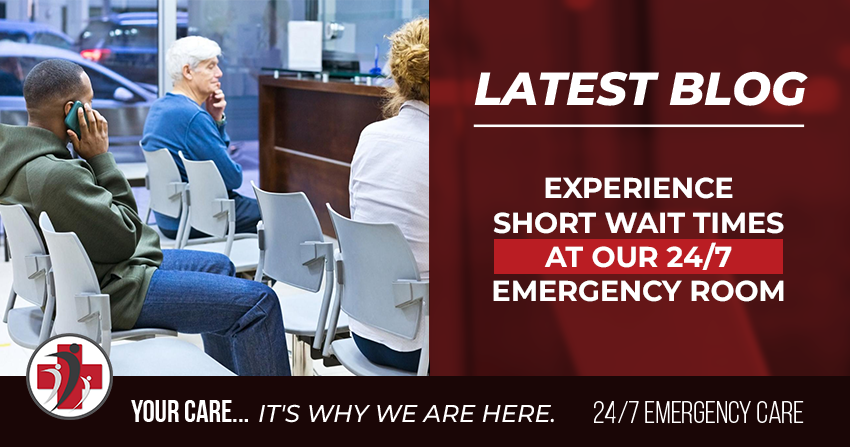
Here’s a scenario you’ve probably lived through, or at least heard about from someone you know. You walk into an emergency room feeling genuinely terrible. You check in. You sit down. And then you wait. And wait. And an hour passes. Then two. You watch people come and go. You wonder if they forgot about you. You start questioning whether your symptoms are even real anymore, because surely if they were serious, someone would have seen you by now.
Long ER wait times aren’t just inconvenient; they’re demoralizing. They already make anxious people feel invisible. And in some cases, they genuinely compromise care. That’s why finding a 24/7 emergency room with short wait times isn’t a luxury. It’s a reasonable expectation.
Why Wait Times Vary So Dramatically Between Emergency Rooms
Not all ERs are equally overwhelmed, and understanding why helps explain why some visits drag on for hours while others are remarkably efficient.
Large urban hospital emergency departments serve enormous populations. On any given evening, they might be managing multiple trauma cases, psychiatric evaluations, admissions waiting for hospital beds, and dozens of patients with varying acuity levels, all competing for a limited number of physicians and nurses. The result? Wait times that routinely stretch past two, three, even four hours for non-critical patients.
Community-based emergency rooms serve smaller populations and typically see lower patient volumes. That translates directly into shorter wait times. Fewer patients in the waiting room means you’re triaged faster, seen by a provider sooner, and discharged more quickly.
The size of the facility matters, but so does the staffing model. A 24/7 emergency room that maintains consistent physician and nursing coverage around the clock, rather than reducing staff during overnight hours, keeps wait times stable regardless of when you walk in.
What Happens During Triage and Why It Determines Your Wait
When you arrive at any emergency room, a triage nurse evaluates your condition and assigns a severity level. This system, the Emergency Severity Index (ESI), ranks patients from 1 (most critical, immediate life threat) to 5 (least urgent).
If you’re an ESI Level 1 or 2, you’re going straight back. Heart attacks, strokes, severe breathing difficulty, and active hemorrhage don’t wait.
If you’re an ESI Level 3, which includes many common ER presentations like moderate abdominal pain, high fevers, or injuries needing imaging, your wait depends on how many higher-acuity patients are ahead of you and how many providers are available.
ESI Levels 4 and 5, minor complaints that might have been better suited for urgent care, tend to wait the longest in busy ERs.
In a 24/7 emergency room with lower patient volumes, even Level 3 and 4 patients are typically seen much faster simply because there are fewer people competing for the same provider’s attention.
How Fountain Hills Medical Center Keeps Wait Times Down
The emergency department at Fountain Hills Medical Center was designed to function efficiently without sacrificing thoroughness. Several factors contribute to the shorter wait times patients experience here.
Appropriate staffing levels: The ER maintains physician and nursing coverage that matches anticipated patient volumes, ensuring that even during busier periods, there’s capacity to see new patients promptly.
On-site imaging and labs: When every test can be performed in-house, including X-rays, CT scans, blood work, and urinalysis, there’s no waiting for outside facilities to process samples or send back images. Results come faster, treatment decisions happen sooner, and the overall visit length shortens.
Streamlined workflows: From registration to triage to treatment, each step in the patient’s journey has been structured to eliminate unnecessary bottlenecks. Nursing staff begin assessments quickly, and providers are available to evaluate patients without long gaps between steps.
Manageable patient volume: As a community-focused emergency room, FHMC serves its local population without the overwhelming census numbers that cripple wait times at major hospital ERs.
The Connection Between Wait Times and Quality of Care
Some people assume that a shorter wait means a less thorough evaluation. That’s not how it works. In fact, the opposite is often true.
When physicians aren’t juggling 25 patients simultaneously, they have more time to spend with each individual. They can ask more questions, explain findings more thoroughly, discuss treatment options in greater detail, and ensure that patients understand their discharge instructions before leaving.
Rushed care isn’t better care. It’s care that’s more likely to result in missed diagnoses, incomplete explanations, and patients who leave confused about what they’re supposed to do next.
A 24/7 emergency room that offers short wait times and attentive care isn’t cutting corners; it’s operating the way emergency medicine is supposed to work.
Real Situations Where Short Wait Times Make a Measurable Difference
For certain conditions, the time between arrival and treatment directly affects outcomes.
Stroke: The clot-busting drug tPA is most effective when administered within three hours of symptom onset (and can be given up to four and a half hours in some cases). Every minute spent in a waiting room is a minute of brain tissue at risk.
Heart attack: Rapid EKG interpretation and troponin testing allow physicians to identify cardiac events and initiate treatment quickly. Delays in this process can mean more heart muscle damage.
Sepsis: This life-threatening response to infection worsens rapidly. Early antibiotic administration and fluid resuscitation dramatically improve survival rates. A 2017 study published in the New England Journal of Medicine found that each hour of delay in antibiotic administration for sepsis increased mortality risk.
Appendicitis: Prompt diagnosis through CT imaging and lab work allows for surgical consultation before the appendix ruptures, a complication that significantly increases recovery time and risk.
In each case, a 24/7 emergency room with the capacity to see patients quickly and run diagnostics without delay provides a meaningful advantage.
What Patients Can Do to Help Reduce Their Own Wait Time
While most of the wait time equation is on the facility’s side, patients can take a few steps to move things along.
Bring your insurance card and a photo ID. Fumbling through forms and phone calls to find policy numbers adds time to the check-in process.
Have a current list of medications, names, doses, and frequencies. This speeds up both the triage assessment and the physician’s evaluation.
Be specific about your symptoms. “I’ve had sharp pain in my lower right abdomen for six hours, it started suddenly, and I’ve vomited twice” gives the triage nurse much more useful information than “my stomach hurts.” Specificity helps with accurate triage scoring, which determines how quickly you’re seen.
If possible, bring someone with you who can help with paperwork and communication, especially if you’re in significant pain or distress.
Around-the-Clock Availability Means No Bad Time to Seek Care
One of the underrated aspects of a 24/7 emergency room is that overnight and early morning hours often have the shortest wait times of all. Patient volumes tend to drop between midnight and 6 a.m. in most community emergency rooms, which means if your situation is urgent but not immediately life-threatening, you might experience an exceptionally efficient visit during those hours.
That said, don’t time your visit based on projected wait times if your symptoms are severe. Chest pain at 2 p.m. or 2 a.m. still needs the same urgent response. But for situations where you have a bit of flexibility, a worsening infection, or a painful injury that’s been managed at home for a few hours, knowing that late-night visits tend to move faster can help you plan.
Community-Focused Emergency Care Gets It Right
Large hospital systems do incredible work for complex cases, major surgeries, specialized intensive care, and transplant medicine. But for the majority of emergency visits, a community-based 24/7 emergency room offers a better experience for the patient. Shorter waits. More personal attention. Less chaos.
Fountain Hills Medical Center serves the Fountain Hills community with exactly this model: full emergency capabilities, around-the-clock availability, and an environment where patients feel seen, both literally and figuratively, from the moment they walk through the door.
Conclusion
You shouldn’t have to choose between getting timely care and getting thorough care. A well-run emergency room provides both. If you’re in the Fountain Hills area and want to know more about what to expect from a 24/7 emergency room that values your time as much as your health, visit FHMC’s website or come see us when you need us. We’re here around the clock, and we’re ready.