
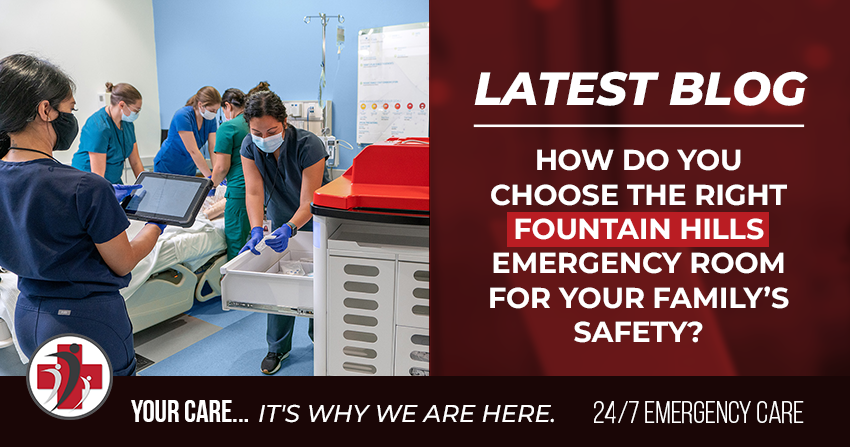
When a medical emergency happens, it rarely gives you time to think clearly or compare options. A child spikes a high fever in the middle of the night, a parent develops sudden chest discomfort, or a family member suffers an injury that looks more serious than expected. In those moments, everything feels urgent, and the only priority is getting the right care as quickly as possible.
But the truth is, the emergency room you choose can significantly influence how fast you are seen, how accurately the condition is diagnosed, and how smoothly treatment begins. That is why choosing the right emergency room in Fountain Hills should not be a last-minute decision made under stress. It is something families should understand in advance so they can act with confidence when it matters most.
This guide explains what actually defines a reliable emergency room and how you can evaluate your options in Fountain Hills to ensure your family receives safe, efficient, and high-quality care.
Why the Choice of Emergency Room Really Matters
Most people assume that all emergency rooms function the same way because they are designed for urgent medical situations. However, in reality, there are important differences in staffing, wait times, diagnostic capabilities, and overall patient experience. These differences can affect not just comfort, but also how quickly a serious condition is identified and treated.
A well-equipped emergency room does more than provide basic care. It ensures that patients are evaluated immediately, critical conditions are ruled out quickly, and treatment begins without unnecessary delays. On the other hand, a crowded or under-resourced facility may lead to longer wait times, slower diagnostics, and increased stress for patients and families who are already in a vulnerable situation.
This is why selecting the right emergency room is not just a matter of convenience; it is a matter of safety and preparedness.
24/7 Availability Is the First and Most Important Requirement
A true emergency room like Fountain Hills Emergency Room And Medical Center must be available at all times without exception. Medical emergencies do not follow business hours, and symptoms often worsen at night, during weekends, or on holidays when most clinics are closed. A facility that operates 24 hours a day, 7 days a week ensures that patients are never left waiting for care when minutes matter.
In Fountain Hills, having access to a continuously open emergency room means families do not need to worry about timing or availability. Whether it is early morning or late at night, the ability to walk into a fully functioning emergency facility provides a level of reassurance that cannot be replaced by scheduled medical services.
This round-the-clock access is especially critical for conditions like chest pain, difficulty breathing, severe injuries, or sudden neurological symptoms, where immediate evaluation is essential.
Speed of Treatment and Wait Times
Another key factor that separates emergency rooms is how quickly patients are seen after arrival. In real emergencies, waiting even a short time can feel overwhelming, especially when symptoms are painful or concerning.
Some emergency rooms, particularly large hospital-based facilities, experience high patient volume, which can lead to longer wait times before initial evaluation. While they prioritize life-threatening cases, other patients may still experience delays in being seen or receiving diagnostic testing.
Freestanding emergency rooms or smaller community-focused facilities often aim to reduce this delay by streamlining patient intake and prioritizing rapid physician evaluation. The goal is simple: patients should be assessed quickly so that testing and treatment can begin without unnecessary waiting.
For families, this speed can make a significant difference not only medically but also emotionally, as it reduces anxiety during already stressful situations.
On-Site Diagnostic Capabilities for Faster Answers
One of the most important features of a high-quality emergency room is the availability of advanced diagnostic tools within the facility itself. In emergencies, doctors rarely rely on symptoms alone because many serious conditions present in similar ways.
For example, chest pain could be related to something minor like muscle strain, or something life-threatening like a heart attack. Headaches might be caused by dehydration or, in more serious cases, neurological issues. Without diagnostic testing, it is impossible to determine the exact cause quickly and safely.
That is why emergency rooms equipped with on-site CT scans, X-rays, laboratory testing, and cardiac monitoring have a major advantage. These tools allow physicians to make fast and accurate decisions without sending patients elsewhere for testing. The result is quicker diagnosis, faster treatment, and improved patient outcomes.
Experience and Training of the Medical Team
The quality of care in an emergency room depends heavily on the expertise of the physicians and medical staff. Emergency medicine is a specialized field that requires quick thinking, accurate judgment, and the ability to manage a wide range of urgent conditions under pressure.
A reliable emergency room should be staffed by board-certified emergency physicians and trained nurses who are experienced in handling everything from minor injuries to life-threatening emergencies. Their ability to recognize warning signs early and respond appropriately is critical in ensuring patient safety.
Families should feel confident that the medical team is not only qualified but also experienced in handling urgent situations efficiently and compassionately.
Range of Conditions the Emergency Room Can Handle
A strong emergency room should be prepared to treat a wide spectrum of medical issues without hesitation. This includes conditions such as chest pain, breathing difficulties, abdominal pain, fractures, severe infections, head injuries, and sudden neurological symptoms like dizziness or confusion.
The ability to manage both minor and severe conditions ensures that patients do not need to guess the seriousness of their symptoms before seeking care. Instead, they can go directly to the emergency room knowing that whatever the issue is, it will be evaluated appropriately.
This flexibility is especially important for families with children or elderly members, where symptoms can sometimes escalate quickly or present in unexpected ways.
Environment and Patient Experience During Stressful Moments
The physical environment of an emergency room plays a bigger role than many people realize. During a medical emergency, patients and families are often anxious, confused, or in pain. A calm, clean, and well-organized environment can help reduce that stress significantly.
A well-designed emergency facility should offer a structured intake process, comfortable waiting areas, and clear communication from staff throughout the visit. When patients feel informed and supported, it becomes easier to navigate the emotional strain of an emergency situation.
Even small details, such as how quickly updates are shared or how respectfully patients are treated, contribute to the overall experience and sense of safety.
Communication and Transparency with Families
Clear communication is one of the most important yet often overlooked aspects of emergency care. Families want to understand what is happening, why certain tests are being done, and what the next steps will be.
A reliable emergency room ensures that physicians and staff take the time to explain diagnoses, treatment plans, and test results in a way that is easy to understand. This transparency builds trust and helps families feel more in control during a stressful situation.
Without clear communication, even good medical care can feel overwhelming or confusing, which adds unnecessary stress during emergencies.
Continuity of Care After the Emergency Visit
Emergency care does not end when the patient leaves the facility. In many cases, follow-up appointments, specialist referrals, or continued treatment may be necessary.
A well-organized emergency room provides detailed discharge instructions and guidance on what to do next. This may include medication instructions, warning signs to watch for, or recommendations for further care.
This continuity is important because it ensures that recovery continues smoothly and that no critical steps are missed after the initial emergency is resolved.
Location and Accessibility in Fountain Hills
In emergencies, distance and accessibility matter just as much as medical quality. A nearby emergency room reduces travel time and allows patients to receive care sooner, which can be especially important in serious situations.
For families in Fountain Hills, having access to a local emergency facility provides peace of mind knowing that help is close by. Instead of driving long distances to larger hospitals in high-pressure situations, patients can reach care quickly and begin treatment without delay.
Knowing When to Go Immediately
Understanding when to use an emergency room is just as important as choosing the right one. Certain symptoms should always be treated as emergencies, including severe chest pain, sudden weakness or numbness, difficulty breathing, uncontrolled bleeding, or loss of consciousness.
In these cases, delaying care can significantly increase the risk of complications. A properly equipped emergency room is designed specifically to respond to these situations immediately, making it the safest choice.
Final Thoughts
Choosing the right Fountain Hills emergency room is ultimately about preparation, awareness, and confidence. In a medical emergency, you do not have time to research or compare options; you need to act quickly and trust that the facility you choose can provide safe and effective care.
A strong emergency room should offer 24/7 availability, fast patient evaluation, advanced diagnostic tools, experienced medical staff, and clear communication throughout the visit. When these elements come together, they create a healthcare environment that prioritizes both speed and safety.
For families, having that knowledge ahead of time can make all the difference. Because in emergencies, the best decision is not just the fastest one; it is the one that ensures the highest level of care when it matters most.